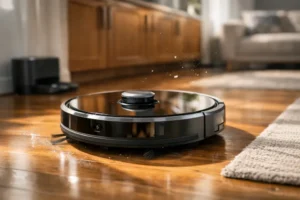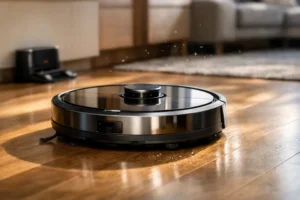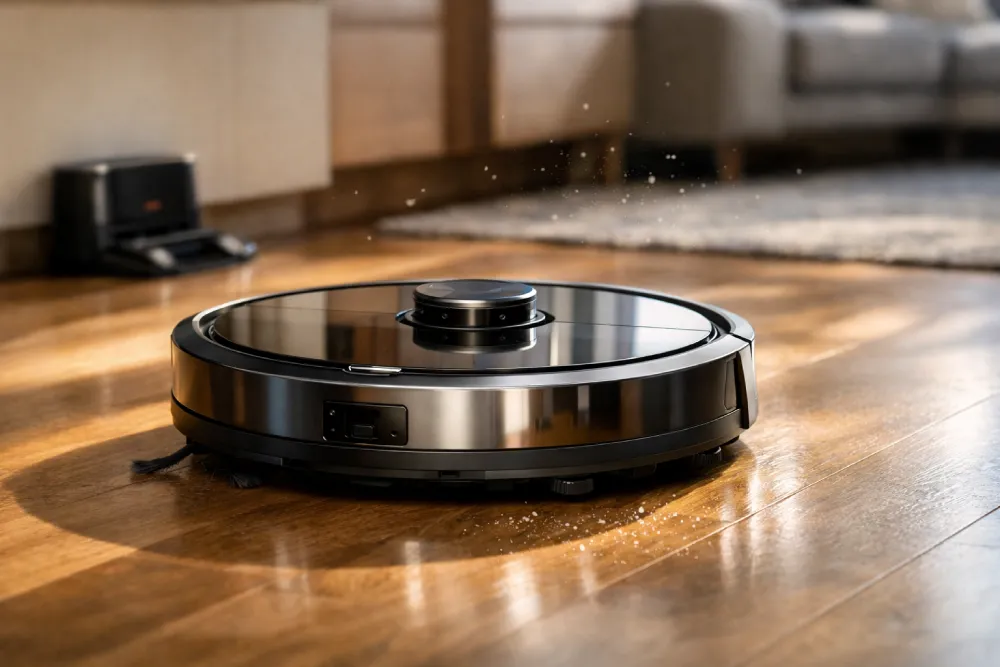
Robot vacuums are smart, autonomous cleaners that map your home, navigate obstacles, and scrub floors with suction, rotating brushes, and filters so you don’t have to lift a finger. They rely on sensors, mapping software, and varied navigation—random sweeps or precise plans—to cover floors efficiently. Strong suction, tangle-free brushes, and reliable edge cleaning matter, especially on pets or thick carpet. Docking behavior and maintenance shape real-world use. If you keep exploring, you’ll uncover how to pick the right model.
Key Takeaways
- Robot vacuums autonomously clean floors using suction, brushes, a bin, wheels, sensors, and mapping software to navigate and decide where to clean.
- Cleaning mechanics depend on suction power, brush design, and filtration; routine dust removal is strong, deep soils may need manual intervention.
- Navigation uses LiDAR/cameras, sensors, and maps to detect boundaries, drops, and obstacles, affecting speed, coverage, and battery use.
- Real-time mapping and room labeling enable no-go zones, scheduled cleans, and predictable, efficient coverage.
- When buying, prioritize navigation quality, strong suction, edge cleaning, reliable docking, maintenance ease, and compatibility with routines within budget.
What Is a Robot Vacuum and What Does It Actually Do?
So, what exactly is a robot vacuum, and what does it actually do? You place it on the floor, power it up, and it autonomously cleans without your hands-on effort. It combines suction, rotating brushes, and wheels to collect dust, hair, and debris into a bin. You control it with a button, an app, or voice, but its core job remains the same: remove dirt from surfaces with minimal supervision. It navigates using sensors, mapping, and software to decide where to go next, avoiding stairs and obstacles. Some models add mopping, virtual barriers, or self-emptying docks, but the fundamental function is the same: automate routine cleaning, expand your daily maintenance window, and keep floors consistently tidier between deeper cleans.
How Robot Vacuums Work: The Basics
How do robot vacuums actually clean your floors? You power one up, it activates suction, brushes, and filters to pull dirt into a bin. A main brush loosens dirt from floors and carpets, while side brushes sweep edges inward. Wheel motors propel the unit and help it traverse different surfaces. Sensors and software guide movement, detecting obstacles, drops, and edges to prevent mishaps. Some models rely on random navigation, others use mapping to cover areas more efficiently. Debris is sucked through a nozzle, passes a filter, and lands in the bin; air exits cleaner than it enters. Efficiency depends on suction power, brush design, and filtration, plus how well the cleaner adapts to your floor types. This baseline helps you compare basics before diving into features.
Also Read
How Robot Vacuums Navigate Your Home
Robot vacuums decide where to clean using a mix of sensors, maps, and smart algorithms. You’ll see them prioritize efficiency, coverage, and adaptivity as they move. They start by sensing boundaries, drops, and obstacles, then chart a route that minimizes backtracking.
In random models, movement is stepwise and opportunistic; in map-enabled units, you get systematic paths, room labeling, and no-go zones. Navigation relies on a blend of LiDAR, cameras, bump and cliff sensors, plus onboard mapping software. You’ll notice cleaner coverage when the device learns your layout, remembers furniture, and plans future passes.
Battery constraints push it to balance speed with thoroughness, returning to the dock when needed and resuming where it left off. Navigation quality often determines overall satisfaction more than raw suction.
How Mapping Works and Why It Matters
Mapping isn’t just a gimmick—it’s how a robot vacuum becomes efficient. You’ll see maps instructor-style both during setup and as you clean. They let the device plan routes, avoid revisiting empty areas, and prioritize dirty zones. Real-time updates adjust paths when doors open, furniture shifts, or new debris appears. A mapped home translates to fewer missed spots and faster completion, which matters for busy schedules. You’ll encounter rooms labeled, no-go zones, and scheduled cleans, all anchored by your map. Precision matters: higher-fidelity maps reduce misreads and collisions, especially on mixed surfaces. In short, mapping is the backbone of predictable coverage, not a luxury feature. If you want smarter cleaning, expect mapping to drive how, when, and where your vacuum works.
What Robot Vacuums Can and Can’t Do
Are robot vacuums truly miracle cleaners, or do they’ve real limits you should know about? You’ll notice they excel at routine dust removal, but they’re not omnipotent. They struggle with deep cleans on heavy soils and opaque messes that require a human touch.
Navigation, while improving, isn’t flawless: small gaps, shadows, or tangled cords can slow progress or trigger false detections. They excel with mapped layouts and predictable layouts, but cluttered or multi-floor homes still demand supervision or reconfiguration.
Battery life matters; in larger spaces you may experience recharging resumes or shorter run times. Pet hair? great for average homes, yet high-pile carpets or long fur can reduce efficiency. Self-emptying docks and mopping add convenience but introduce cost and maintenance considerations.
What First-Time Buyers Should Look for
So what should first-time buyers actually look for when choosing a robot vacuum? Focus on real-world impact, not hype. Prioritize navigation quality over raw specs: mapping, room labeling, and no-go zones improve coverage and reduce monitoring needs. For homes with pets or thick carpet, seek strong suction, tangle-free brushes, and reliable edge cleaning. Assess docking behavior—resume after recharge matters in larger spaces. Consider maintenance ease: filter access, bin size, and brush cleaning time. Look for mapping updates and app controls that align with your routine, not just novelty features. Battery life should enable full-home cleaning without frequent recharges. Finally, match features to your space: simple models for small apartments, smarter maps for multi-room layouts, and compatible voice control if that fits your setup.
Are Robot Vacuums Worth It for Most Homes?
Robot vacuums are worth it for many homes, but not every setup benefits equally. You’ll get real value when you value routine edges, clutter, and schedules over hype.
For small-to-mid homes with mostly hard floors or light carpet, a well-mapped unit delivers consistent daily upkeep and saved time.
In larger, multi-room layouts, navigation quality and dock behavior matter more because gaps and recharges add friction.
Pet owners often gain from strong suction and easy maintenance, while homes with lots of obstacles benefit from obstacle avoidance and precise mapping.
If you prefer one-and-done deep cleans, a robot might feel limited.
Common Mistakes First-Time Buyers Make
Many first-time buyers underestimate how much a model’s navigation and daily upkeep influence satisfaction. You’ll overlook how map quality, recharge behavior, and maintenance cadence drive real-world results. Common mistakes cluster around overestimating intelligence, underestimating clutter, and ignoring home layout.
- Selecting a model with flashy features but weak navigation for your floor plan
- Neglecting maintenance needs like filter cleaning, brush care, and bin emptying
- Ignoring docking behavior, recharge-resume limits, and routine scheduling implications
To avoid these, match navigation type to your home (systematic maps for complex layouts, robust sensors for stairs or pets), plan for regular upkeep, and set realistic expectations about how often the robot returns to base. When you align features with your space and routines, satisfaction follows.
Final Takeaway: How to Choose the Right Robot Vacuum
What matters most when choosing a robot vacuum isn’t all the bells and whistles—it’s how well the unit fits your home, routines, and maintenance tolerance. You should measure real-world needs: floor types, pet hair, layout complexity, and how much you’re willing to interact with setup and upkeep. Prioritize navigation quality over clever features; systematic mapping beats random cleaning for consistent coverage. Assess suction power and brush design in relation to your floors, not just specs. Consider mapping capabilities, no-go zones, and scheduled cleanings as productivity multipliers, not status symbols. Battery life and recharge-resume behavior matter in larger spaces. If you value hands-off operation, a self-emptying dock can justify cost. Finally, align choice with your budget, routines, and tolerance for occasional manual intervention.
Frequently Asked Questions
Do Robot Vacuums Require Daily Maintenance?
Yes, you’ll want some daily maintenance. Empty the bin, check brushes, wipe sensors, and quick dusting. It stays efficient when you stay proactive, not reactive—a small daily habit prevents bigger, costlier cleanups later.
Can They Clean Stairs or Multi-Level Homes?
No—robot vacuums generally don’t clean stairs. They work on one level; you’d need a separate hand vac or a robot with stairs-safe features, plus a barrier plan. For multi-level homes, invest in multiple charging/ dock setups.
How Long Do Battery Replacements Last?
Battery replacements typically last 1-2 years with regular use. You’ll notice shorter life if you run daily, vacuum often in high-traffic areas, or abuse charging cycles. Plan for ~1 replacement per year per device.
Are Robot Vacuums Safe for Pets and Kids?
Yes—robot vacuums are generally safe for pets and kids when you choose models with strong sensors, tumble-free design, and good obstacle avoidance, plus regular maintenance. Keep cords and small objects cleared, supervise initial uses, and use no-go zones.
Do Models With Mapping Cost Significantly More?
Yes, mapping adds cost, but you’ll get better efficiency and planning. If you want price-to-value, target mid-range models with room labeling and no-go zones; premium mapping robes extra for full-room memory and advanced controls.
Conclusion
You’re nearly ready to pick a robot vacuum that actually helps, not hinders. In brief: know your space, pick solid mapping and suction for your floors, and choose reliable navigation with easy maintenance. Don’t overpay for features you won’t use. Start with a sensible budget, test one room, and iterate. If you miss a beat, remember the 90s web browser was once cutting-edge too—tech evolves fast, so choose a model that keeps improving and fits real-life chores.