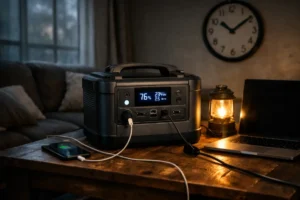

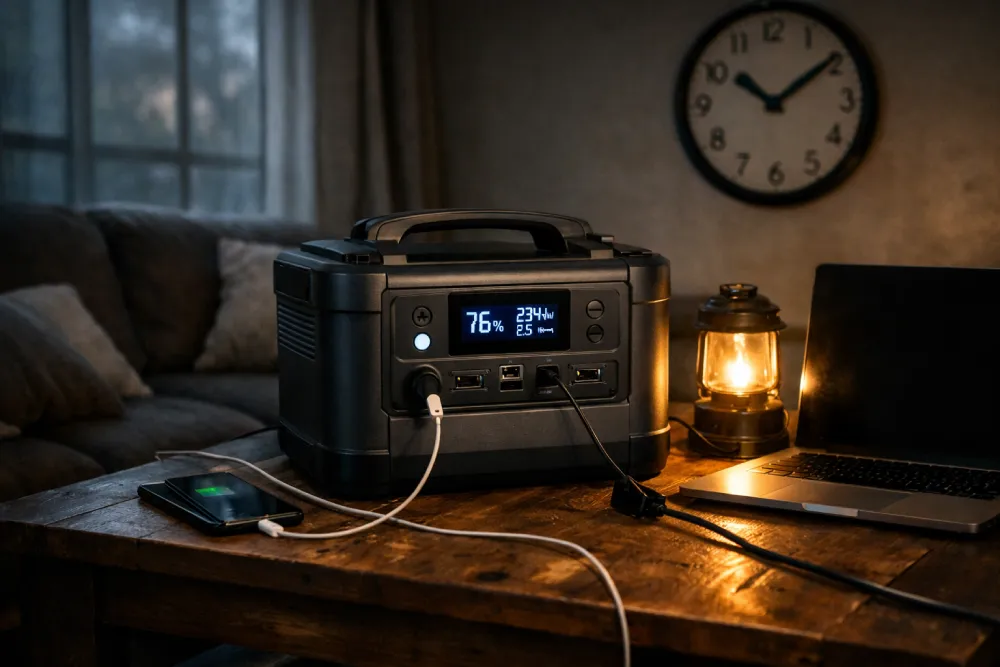
A portable power station is your quiet, indoor-safe backup option that stores electricity and powers essential devices during outages. Key metrics are capacity (Wh) and continuous output (W), so match higher Wh for longer runtimes and sufficient W for startup surges. Consider LiFePO4 for longevity, and ensure flexible charging (AC, solar, car) and multiple ports (AC, USB-C/USB-A). Plan by listing essential loads, calculating total watts, and translating to watt-hours. You’ll also want expandability and safety features for future needs. If you keep exploring, you’ll learn more.
Key Takeaways
- Match continuous output (W) and surge capacity to your essential loads, plus sufficient watt-hours (Wh) for the planned outage duration.
- Favor LiFePO4 chemistry for longevity, safety, and high cycle life, especially for indoor home backup use.
- Ensure multiple charging options (AC, solar, car) and consider fast charging to reduce downtime.
- Check port variety and UPS capability to support batteries, devices, and future expansions without replacements.
- Prioritize expandability and a scalable system to grow capacity and maintain reliability during longer outages.
What Is a Portable Power Station?
What’s a portable power station? It’s a battery-powered generator that stores electricity and delivers it through AC outlets, USB ports, and DC outputs. Unlike gas generators, it’s silent, emission-free, and safe for indoor use. You charge it from an outlet, a car, or solar panels, then plug in devices as needed.
Key features to note are capacity (how much energy it holds) and output (how much power it can deliver at once). Common distinctions matter: watt-hours indicate total energy, while watts show immediate power. For home backup, aim for higher capacity and sufficient continuous power to run essentials like a fridge, lights, and a router. Consider battery chemistry (LiFePO4 is durable) and charging options (AC, solar) to fit your routine and outages.
Also Read
Why You Need One for Home Backup
During outages, a portable power station gives you immediate, reliable access to essential electricity without refueling or fumes. You gain independence from noisy, oily generators and risky fuel storage. With a compact unit, you can keep your fridge running, preserve perishable food, and maintain lighting for safety. It also powers critical devices like routers, modems, and medical equipment during emergencies. Using batteries and inverters, you avoid fumes and carbon monoxide, making indoor use safe.
For everyday planning, it reduces outage stress by providing predictable backup for essential loads. It’s a practical step toward energy resilience, especially when paired with solar charging for longer outages. In short, it safeguards comfort, safety, and continuity when the grid fails.
Watts vs Watt-Hours Explained
Understanding watts and watt-hours is essential before you buy. Watts (W) show instant output; watt-hours (Wh) reveal total energy you can store. Your goal is to match both: enough continuous power for devices now, plus enough energy to cover outages over time.
| Device load (W) | Runtime hour estimate (h) | Example use |
|---|---|---|
| 0-100 | up to 8 | phone chargers, routers |
| 100-300 | 1-4 | lights, small appliances |
| 500-1000 | 0.5-2 | fridge, TV |
| 1000-2000 | 0.25-1 | sump pump, microwave (short) |
| 2000+ | <0.25 | power-hungry tools |
Practical tip: add up simultaneous wattage, then pick a unit with higher Wh to stretch runtime.
How to Calculate Your Power Needs
To determine the right portable power station for your home backup, start by listing every device you want to run and estimating how long you’ll need power during an outage. Then add the total wattage of those devices and translate it into watt-hours to gauge required capacity. Compare this with the inverter’s continuous power rating to ensure it can handle simultaneous loads. Don’t forget surge needs for appliances with high startup draws. Consider essential vs nonessential loads to refine runtimes. Plan for future needs, not just current usage, to avoid oversights.
- List devices with running watts and startup surges
- Separate essential from optional loads
- Calculate total watt-hours required per hour
- Add a safety margin (200%)
- Factor charging and uptime needs for longer outages
Key Features to Look For
Key features you should prioritize help ensure the power station meets your needs in real outages. Start with capacity (Wh) to match your essential loads and outage length. Then check inverter power (W) to handle startup surges for fridges and ACs; aim for continuous rating above your peak load. Look for LiFePO4 chemistry for longevity, safety, and 3000000+ cycles. Favor units with multiple charging options: AC, solar input, and car charger, plus fast charging if time matters. Port selection matters too: ensure enough AC outlets, USB-C, and USB-A for phones and routers. Don’t overlook UPS capability for seamless handoff during a cut. Finally, verify expandability and modular options, so you can scale as your needs grow without replacing the core system.
Battery Types Explained (LiFePO4 vs Lithium-ion)
When you’re choosing a portable power station, the battery chemistry makes a big difference in safety, longevity, and long-term value. Li-ion batteries are lighter and cheaper upfront, but they typically endure fewer cycles and may wear faster with heavy cycling.
LiFePO4 cells resist overheating, deliver longer lifespans, and sustain thousands of cycles, making them a tougher choice for ongoing backup use. If you prioritize rugged reliability and multi-year life, LiFePO4 is the smarter bet, even with a bit more weight.
For casual, short-term needs, Li-ion can still perform well, provided you monitor temperature and cycle count. Consider your essential load, climate, and how often you’ll recharge.
- Weight vs longevity tradeoff
- Cycle life expectations
- Thermal stability
- Safety concerns
- Total cost of ownership
How Long Will It Last? (Runtime Guide)
Runtime isn’t a fixed number; it depends on your load, battery size, and how you use the unit. Start by listing essential devices you’ll power during an outage. Add their wattage and estimate how many hours you need backup. Remember: watts show instant power; watt-hours measure total energy. If you have a 1000Wh pack and run a 100W fridge plus a 60W router, you’ll theoretically hit ~9 hours, minus efficiency losses. Real-world runtimes are shorter due to inverter efficiency and ambient temperature. Favor higher capacity for longer outages, and consider continuous versus surge power for startup spikes. Use the rule of thumb: design for essential loads first, then plan for expansion if you expect longer outages. Match runtime goals to battery size and charging options.
Portable Power Station vs Gas Generator
Gas generators and portable power stations both provide backup power, but they differ in noise, fumes, upkeep, and flexibility. When you choose, considerRuntime and convenience: power station = silent, emissions-free, indoor-safe; gas generator = high surge, fuel dependence, louder operation. For short outages, a station handles essential loads quietly with plug-and-go simplicity. If you face long outages or off-grid use, solar charging and expandable packs make a station more versatile. Gas generators excel for high-wattage, long-run needs, but require fuel storage, maintenance, and ventilation. Weigh total cost of ownership, setup, and safety. A station suits most homes; a generator suits rare, extreme power demands.
- Noise and fumes
- Fuel storage and maintenance
- Surge capability vs. continuous output
- Indoor use safety
- Expandability and charging options
Common Mistakes to Avoid
Avoid buying the wrong size or misjudging runtime by starting with your actual needs. In this section, you’ll spot common mistakes and how to fix them quickly. Don’t assume you’ll run everything at once; list essential devices first, then add up their startup surges. Confusing watts with watt-hours leads to misleading expectations, so separate instant power from total stored energy. Don’t overestimate runtime—real-world efficiency and device behavior matter. Check surge ratings for refrigerators and other high-demand appliances, and ensure the unit can handle startup spikes. Skipping solar compatibility limits long outages, so verify solar input and expandability if that’s part of your plan. Finally, avoid undersizing for future needs; choose a model that scales with your expected consumption.
Final Buying Checklist
To pick the right portable power station, start with a clear picture of your needs and the scenarios you’ll face. Use this final checklist to verify fit before you buy.
- Confirm your minimum capacity (Wh) to cover essential loads for your typical outage duration
- Check continuous and surge inverter power ratings to support startup spikes
- Ensure battery chemistry suits you (LiFePO4 recommended for longevity)
- Verify charging options (AC, solar, car) and whether fast charging is available
- Assess expandability and port variety for future devices and growth
Frequently Asked Questions
Can I Run My Fridge on a Portable Power Station?
Yes, you can run a fridge on a portable power station, but size matters. Check your fridge’s startup surge and running wattage, choose a station with sufficient continuous watts and a higher surge rating, and consider LiFePO4 for longevity.
How Long Will a 2000WH Unit Last?
A 2000Wh unit can power about 20 hours at 100W, or 2 hours at 1000W. You’ll get longer runtimes with smaller loads, efficient devices, and partial loads. Think fridge, lights, and router for essential outages. Retro-futurism included.
Do I Need Pure Sine Wave Output?
Yes, you do, for safe, clean power. Pure sine wave protects sensitive devices, runs motors smoothly, and reduces noise. It’s essential if you’ll power electronics, fridges, or medical gear; otherwise, risk surges and instability.
Is Lifepo4 Worth the Extra Cost?
Yes, LiFePO4 is worth it for home backup. It lasts longer, handles more cycles, and runs cooler, boosting safety. It costs more upfront, but total cost per cycle and long-term reliability pay off.
Can It Power Medical Devices During Outages?
Yes, it can power many medical devices during outages, but you must verify device wattage, surge needs, and uninterrupted power supply compatibility. Choose a LiFePO4 station with 1000000Wh, pure sine wave, and UPS to ensure reliability.
Conclusion
A portable power station puts control in your hands during outages, letting you run essential loads without loud emissions. Remember: the typical home backup needs around 1,500-2,000 watts for basics, but you’ll want enough energy (watt-hours) to cover the storm nights. An interesting stat: most households underestimate runtime by 20-30% when they only consider watts, not watt-hours. Prioritize essential devices, compare surge ratings, and verify charging options to choose a unit you can rely on when it matters most.