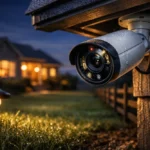

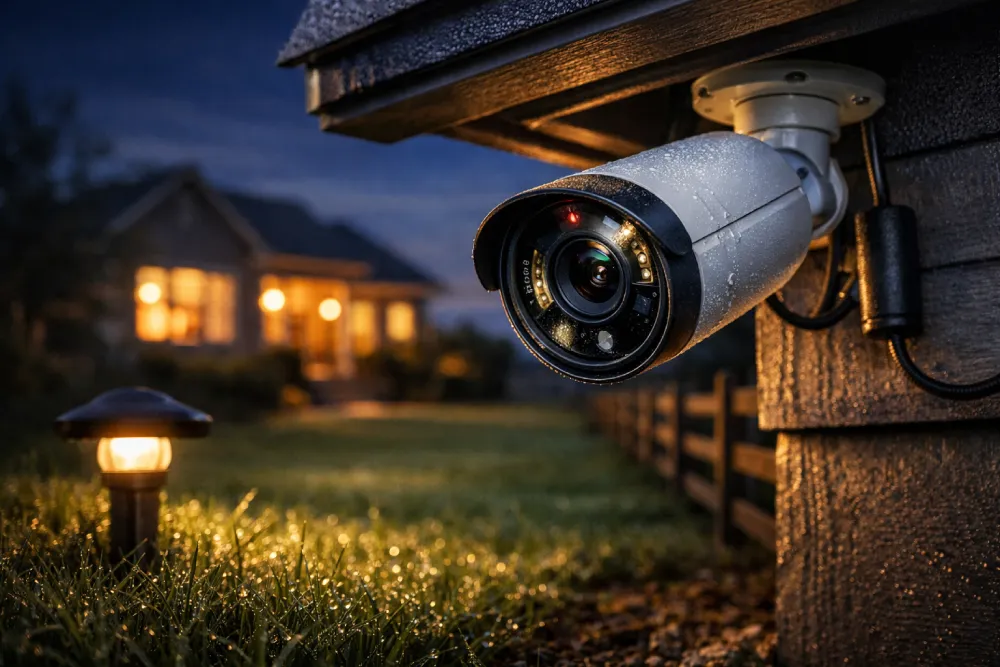
Like a quiet sentinel at the edge of your property, a solid outdoor camera should blend durability with clear visibility. You want weatherproofing (IP65+), reliable power, and steady connectivity to cut false alarms. Look for 1080p or higher, H.265, strong night vision, secure app integrations, and flexible storage with clear retention controls. Pair two-way audio with smart alerts and customizable zones, then place it to minimize blind spots while preserving real-time insights. Ready to weigh your options?
Key Takeaways
- Prioritize deterrence, real-time visibility, and reliable alerts with motion-triggered notifications and two-way audio for quick, decisive responses.
- Ensure robust night vision and proper illumination, balancing color night vision with infrared for clear detail after dark.
- Choose weatherproof hardware (IP65+) with stable power options and fanless design to minimize maintenance and false alarms.
- Balance 1080p – 4K resolution with efficient H.265 compression, strong storage (cloud or local), and secure access controls.
- Favor adaptable app integrations, customizable alert zones, reliable playback, and clear regional compatibility for secure, seamless monitoring.
Why Outdoor Security Cameras Are Essential
Outdoor security cameras matter because they deter crime, provide real-time visibility, and create solid evidence when something goes wrong. You gain immediate awareness of activity around your home, which helps you respond faster and more deterministically. They also shift the behavior of potential intruders, reducing risk before an incident occurs.
With live streaming and mobile access, you monitor entry points, driveways, and yards from anywhere, making security feel proactive rather than reactive. This isn’t just about recording; it’s about actionable insight that informs your decisions, from lighting changes to zoning alerts.
Also Read
In short, reliable cameras enhance safety, support quick verification of events, and strengthen overall household resilience, giving you greater peace of mind and control over Your environment.
Key Features to Look For
You’ll want sharp Resolution clarity, as 1080p is a practical baseline and 2K/4K offer better detail for IDs.
Night vision performance matters most after dark, so look for color night vision or strong infrared with minimal blur.
Finally, choose weatherproofing, power options, storage, and smart alerts that fit your setup and budget, so you get reliable, actionable footage.
Resolution Clarity Matters
When it comes to resolution, you’ll want enough detail to identify faces, license plates, and small features from a practical viewing distance. Higher pixel counts improve identification, but processing power and storage matter too. A 1080p baseline is reliable; 2K or 4K delivers sharper zoom-in capability, reducing guesswork at gateways and porches. Consider compression (H.265) to preserve detail without bloating storage. Real-world tests show nuance: color accuracy in daylight, clarity in shadows, and smooth motion during movement. Look for cameras that maintain detail across varying light levels and weather conditions, not just peak specs. Balance resolution with bandwidth, storage, and cost to ensure dependable, actionable footage.
- 1080p baseline with room to upgrade
- 2K/4K for precise IDs
- Efficient compression (H.265)
- Balanced cost, storage, and bandwidth
Night Vision Performance
Night vision performance often makes or breaks a security camera in real-world conditions, so focus on how well it preserves detail in low light and at the edges of the frame. Look for infrared clarity that remains consistent across the scene, not just center emphasis. Color night vision can help with distinguishable details, but white-and-black IR often delivers better overall contrast at distance. Evaluate how quickly the image stabilizes after activation and whether highlights from nearby lights cause bloom or blur. Check whether the camera uses smart illumination to reduce glare while extending range. Consider the effective range in feet or meters and how well facial features or license plates stay identifiable when zoomed. Finally, test false-color rendering in mixed lighting to gauge reliability.
Weatherproofing Standards
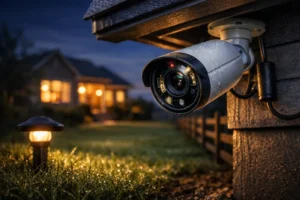
Weatherproofing standards matter because exposure to rain, dust, and temperature swings can kill a camera long before its time. You want a model that can endure seasons, not a fragile gadget. Look for a solid IP rating and real-world performance data. Prioritize models with IP65 or higher, and confirm protection against dust ingress and powerful jets of water. Consider gasketed enclosures and weatherproof seals around housings and ports. Ensure daytime and nighttime reliability in moisture, humidity, and freezing conditions. Verify fanless designs for frost resistance and minimal condensation. Favor cameras with tested temperature ranges and field reports from users in similar climates. A durable shell reduces maintenance and false alarms, protecting your long-term security investment.
- IP65+ rating
- Dust and water protection
- Sealed ports and gasketed housing
- Verified climate testing
Powering Options Tell All
Consider how you’ll power your outdoor camera before you buy. You have two paths: wired or wireless. Wired cameras deliver constant power and a stable connection, ideal if you want uninterrupted recording and fewer battery worries. They require careful routing and more installation effort, but stability matters for crime deterrence and long-term reliability. Wireless cameras offer easy setup and flexible placement, with batteries and optional solar panels, but frequent recharges or panel upkeep can disrupt surveillance. Evaluate your environment, access, and maintenance tolerance. If you choose wireless, factor in battery life, recharge cycles, and replacement costs. Check whether the model supports PoE or standard adapters, and confirm compatibility with your existing network. Prioritize models that balance power reliability with practical installation.
Storage And Alerts Setup
- Cloud vs local storage trade-offs
- Retention length and access controls
- Customizable alert zones and modes
- Playback speed and app reliability
Motion Detection
Motion detection is the heart of practical outdoor security cameras: it triggers alerts, records only when something moves, and helps you respond quickly. Look for customizable detection zones so you don’t get pinged by every passerby. AI-based detection—distinguishing people, vehicles, and animals—reduces false alarms and saves notifications for meaningful events. Set sensitivity levels to balance coverage with battery life and data usage. Ensure the system supports real-time alerts via your phone and, ideally, immediate two-way audio to deter intruders or guide delivery personnel. Consider how motion triggers influence recording—some devices cap footage, others store longer clips. In all, robust motion detection meaningfully narrows what you review, saves storage, and heightens your responsive security.
Wired vs Wireless Cameras: Which Is Better?
When deciding between wired and wireless outdoor cameras, the right choice hinges on your setup, priorities, and installation constraints. Wired cameras excel with reliability, uninterrupted power, and stable connections, ideal if you have existing cabling or plan a fixed, permanent installation.
Wireless models offer speed, easier placement, and lower installation cost, great for renters or temporary setups, though they depend on battery life and Wi‑Fi quality. Consider reliability, maintenance needs, and total cost of ownership—not just upfront price. If you value consistent feeds and longer-term security, wired wins. If you prioritize flexibility and quick deployment, go wireless. Balance your environment, budget, and future plans to decide which aligns with your home.
- Battery life and recharge cadence
- Wi‑Fi signal strength and network overlap
- Power accessibility and run-lengths
- Installation effort vs. future relocations
Where to Install Outdoor Cameras for Maximum Security
To maximize coverage and minimize blind spots, place outdoor cameras at key entry points and high-traffic zones around your home. Prioritize doors, garages, and paths leading to utilities, as these areas see the most activity and offer clearer identification opportunities. Mount cameras high enough to deter tampering but angled downward to capture faces and plates. For driveways, position near the curb with a wide field of view to cover approaching vehicles. Consider side entrances and backyards, especially near fences or easements where concealment threats exist. Balance individual cameras so their views overlap slightly, reducing gaps. Favor weatherproof, motion-aware models with reliable night vision for 24/7 coverage. Ensure placement aligns with network range and power options to sustain performance.
Common Mistakes to Avoid
Common mistakes can undermine even the best outdoor camera setups. You’ll save time and frustration by avoiding these pitfalls from the start. First, skip underestimating placement; misaligned angles or blind spots render footage useless. Next, don’t ignore weatherproof ratings or battery life; exposure and power failures kill reliability. Third, avoid overcomplicating with incompatible apps or ecosystems; fragmented control creates delays during incidents. Finally, resist relying solely on cloud storage without security basics; weak passwords and lax encryption invite trouble. Stay focused on practical, verifiable features, and test regularly to confirm alerts, playback, and recordings work as promised.
- Poor placement that creates blind spots
- Ignoring IP rating, weather, or power constraints
- Fragmented integrations or non-secure apps
- Inadequate access controls and weak storage security
Final Tips for Choosing the Right Camera
Choosing the right outdoor security camera starts with defining your priorities and constraints, then matching them to solid, verifiable specs. Start by listing must-haves (deterrence, night vision, storage) and nice-to-haves (AI alerts, color night vision, solar power).
Prioritize reliability over bells and whistles; weather resistance and a stable connection matter more than flashy features. Compare resolution upgrades only if you’ll actually zoom or identify faces and plates.
Evaluate total cost of ownership: hardware, cloud or local storage, and potential subscriptions. Consider placement pros and installation effort; wired systems often outperform wireless for stability, but batteries simplify setup.
Finally, read independent reviews and verify IP ratings, detection accuracy, and integration with your smart home. Choose a camera that consistently meets real-world needs and budget.
Conclusion
You’re not just buying a camera—you’re cutting risk. When you test a theory about “better coverage”?actually, higher resolution, robust weatherproofing, and smarter AI detections yield fewer false alarms and clearer IDs. Check that it streams reliably, stores securely, and supports zone-based alerts you can trust. If a model checks IP65+, 1080p+, H.265, two-way audio, and solid night vision, you’ve likely found a practical fit—one that turns monitoring into actionable, real-time protection.